Build, Remodel, Retrofit, Green your Existing Home!
Recycle the house you have into the house you need...
What is the hottest trend in do-it-yourself, ecological home construction? Alternative homes are great, but realistically, most of us live in wood frame houses, and the hottest trend among green-thinking do-it-yourselfers is to remodel or retrofit these existing homes to make them more livable and energy efficient.
Fixing up an existing home is an excellent way to conserve resources, time, and money. It is also a good way to experiment with recycled building materials and alternative technologies without all the building permits and inspections associated with new construction.
Remodeling is an excellent choice for baby boomers with the kids out of the nest. Millions of homeowners are choosing to repurpose their existing homes, rather than selling out and looking for something new. Why go through all the trouble to sort, pack, move, unpack, and rearrange a lifetime of belongings? Recycle the house you have into the house you need!
For a free introduction to restoration work, start wtih the The Old House Web Restoration Guide, an edited version of the nine-chapter U.S. Department of Housing and Urban Development (HUD) Rehab Guide.
A Few Good Books
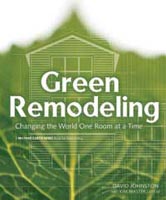
Green Remodeling Changing the World One Room at a Time By David Johnston and Kim Master
Whether because of changing lifestyles or simply because houses are becoming outdated, millions of North Americans are renovating their homes every year, spending more money annually on renovation than on new home construction. But renovations can be fraught with unintended consequences like indoor air pollution. How do you remodel in a healthy, environmentally friendly way?
Green Remodeling is a comprehensive guide. It first points out the advantages of remodeling. Buildings are responsible for 40% of worldwide energy flow and material use; so how you remodel can make a difference. Upgrading furnaces, cabinets and toilets means less fossil fuel pollution, reduced resource depletion, and fewer health risks. Green remodeling is more energy-efficient, more resource-conserving, healthier for occupants and more affordable to create, operate and maintain.
The book then discusses simple green renovation solutions for homeowners, focusing on key aspects of the building including foundations, framing, plumbing, windows, heating and finishes. Room by room, it outlines the intricate connections that make the house work as a system. For example, how new windows may affect the structure and mechanical systems of the rooms below, the health of the family, and the future of old-growth forests. Then, in an easy-to-read format complete with checklists, personal stories, expert insights and an extensive resource list, it covers easy ways to save energy, conserve natural resources, and protect the health of loved ones. Addressing all climates, this is a perfect resource for conventional homeowners, as well as architects and remodeling contractors.
About the Contributors
David Johnston has been developing green building programs for the last 10 years. Named one of the top 50 remodelers in the country by Remodeling Magazine in 1990, he developed the first green remodeling program in the country in Boulder, Colorado, trains remodelers across the US, and is creating a national green certification program for the National Association of the Remodeling Industry. He is President of What's Working and Lightworks Construction, Inc. He is from Boulder, Colorado.
Kim Master is a Green Building Consultant and Senior Associate with What's Working. She was previously Ecommerce/Project Manager with Care2.com, the largest environmental website for healthy living and a healthy planet. She is from Boulder, Colorado.
Authorized affiliate of Bookshop.org and Amazon.com.
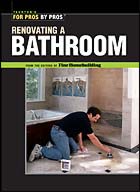
For Pros By Pros Renovating a Bathroom Design strategies, repair procedures, and installation techniques to transform an ailing bathroom.From the Editors of Fine Homebuilding Magazine
Bathrooms demand a builder's best work. As the average size of bathrooms continues to grow and homeowners demand that they have as much style as any other room in the house, the challenges facing anyone undertaking a bathroom remodeling project multiply. Written by architects, builders, plumbers, and tile setters, this collection of articles from Fine Homebuilding magazine will help you overcome these challenges with confidence. Renovating a Bathroom covers the broad range of design options, materials, repair procedures, tools, and installation techniques that can help you transform an ailing bathroom into an exceptional one.
Written by the pros who actually do the work, these articles will help you to:
* redesign a bathroom for improved function and appearance
* choose and install a toilet
* tile a bathroom floor
* install a leakproof shower pan
* use caulks and sealants to prevent moisture problems
* create an accessible bathroom
Softcover, 8-1/2 x 10-7/8 in., 160 pages, with color photos and drawings. Published 2002, ISBN 1-56158-584-X
Authorized affiliate of Bookshop.org and Amazon.com.
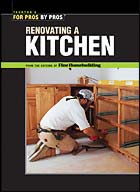
For Pros By Pros Renovating a Kitchen Meeting a wide variety of requirements to improve a kitchen's beauty and utility.From the Editors of Fine Homebuilding Magazine
Kitchen remodeling is one of the most expensive and intensive remodeling projects you can undertake in any house. The process involves important design decisions about cabinets, countertops, lighting, appliances, layout, and finish treatments. In Renovating a Kitchen, a collection of articles from Fine Homebuilding magazine, professional builders and designers take you through each phase of remodeling, from design to building to installation.
Written by the pros who actually do the work, these articles will help you to:
* design and build cabinets on site or from factory-made components and install them correctly
* make plastic-laminate, solid-surface, and concrete countertops
* select and install proper ventilation
* get appliances to fit into your design
* make minor improvements that have major impact
Formerly The Best of Fine Homebuilding: Kitchens, this newly revised edition features 30 percent new content, including the latest tools and techniques and updated photos and illustrations. Softcover, 8-1/2 x 11 in., 160 pages, with color photos and drawings. Published 2002, ISBN 1-56158-540-8.
Authorized affiliate of Bookshop.org and Amazon.com.
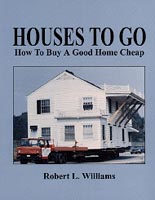
Houses to Go How to Buy a Good Home Cheap By Robert L. Williams
Now you can own that dream home that you've always yearned for--and at such an affordable price that you'll be amazed! How? By following author Robert L. Williams' tried-and-true method of purchasing a perfectly livable house that is destined for demolition, and carefully moving it to a suitable parcel of land -- all for a fraction of the amount such a home would normally cost!
Williams has purchased, moved, and revamped houses himself on several occasions, and has learned the hard way how to cut costs and still ensure high-quality results. Now his wealth of knowledge can be yours. Read this book and learn how to take advantage of the opportunities that will enable you to become the enthusiastic owner of a valuable and comfortable home! Houses to Go: How to Buy a Good Home Cheap. 1997. 145 pages. ISBN: 1-55950-166-9. Coverage includes:
How to locate houses to move
How to decide which house to buy
How much should you pay?
Setting up for the move
The paperwork in house moving
Turnkey and point-to-point moves
Preparing for the point-to-point move
Basement floors and foundation walls
Handling outbuildings and extensions
Making a great bargain better
Re-hanging kitchen cabinets
Converting a closet to a half-bath
Basic plumbing for a new bathroom
Paneling walls and re-flooring rooms
Completing ceiling work
Installing sheetrock unassisted
Lowering ceilings
Final leveling procedures
Final touches
and much more, including lots of photographs that illustrate every aspect of the process
Authorized affiliate of Bookshop.org and Amazon.com.


 DirtCheapBuilder.com